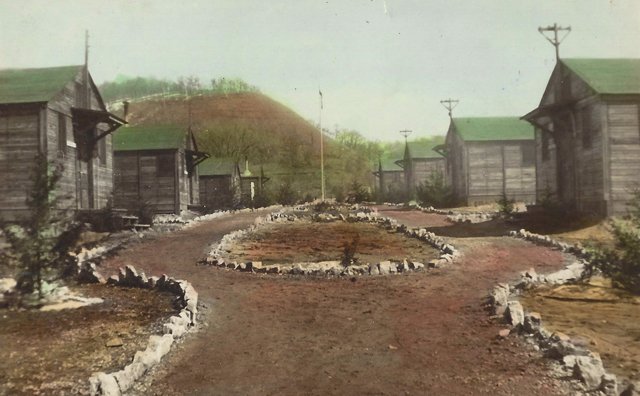
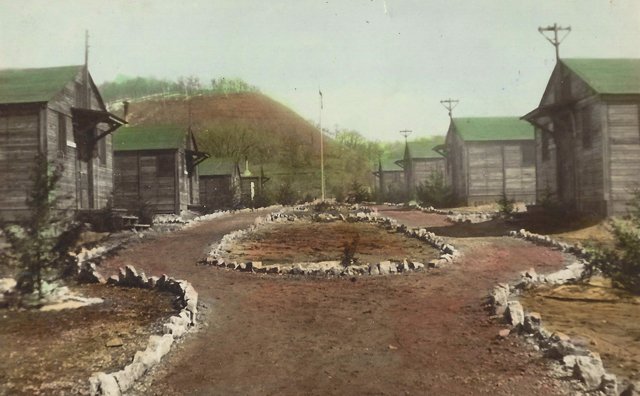
From 1935 to 1942, there was a community consisting of hundreds of young men living in a camp two miles north of Gays Mills on land now occupied by BAPI and extending a ways further north. It was known as the CCC Camp.
For those of you not familiar with the Civilian Conservation Corps, here is a little background information. It was considered one of the most successful programs of President Franklin D. Roosevelt’s New Deal. Nationally, there were up to 300,000 young men enrolled in the program at one time and three million participated during the nine years of the program’s existence. There were over 200 camps in Wisconsin with up to 300 men in each.
The CCC began during the depression when two-and-a-half-million young men aimlessly drifted about the country, hitchhiking and hopping freight trains, to chase rumors of jobs. There were no welfare programs or safety nets and conditions were so desperate at some homes that parents could not provide for them.
At this same time, there was an enormous environmental crisis in the United States. Three quarters of the old growth forests had been cut with few replanting programs in place. These vast cut-over areas were eroding badly.
Years of poor agricultural practices had stripped much of the farmland of its fertility, especially in the south. Dust storms turned much of the Great Plains into a desert forming what was known as the Dust Bowl. Nine million acres of tillable land had already been eroded and another 80 million acres were in jeopardy. The genius of the CCC program is that it addressed all of these issues.
When the program was initiated in 1933, it took young, unmarried men 23-28 years old who were unemployed. It was later expanded to include 17 to 28 year olds. The young men were provided shelter, food and clothing plus $30 per month, $25 of which was sent directly home to their families.
The Gays Mills Camp was Civilian Conservation Corps Company 1604. Company 1604 began in Fort Sheridan, Illinois in 1933. It then was moved first to Clam Lake, Wisconsin, then to Richland Center where it was a tent camp for half a year. Finally it moved to Gays Mills in 1935, where structures were erected as a more permanent site.
Closing the camp in Richland Center drew strong protests from many in Richland County and their hopes of having it return never materialized. We ‘old timers’ who frequented drive-in theaters in neighboring towns in our youth never realized we were sitting on the grounds of the CCC Camp while attending the Richland Center drive-in.
Unlike the ‘tent city’ in Richland Center, there were sixteen permanent wood frame buildings in the Gays Mills Camp, including four barracks, an education building, a mess hall, and shops for drafting, printing, tool storage, workshops, and garage space for 20 trucks and tractors. It was like a separate village, only two miles from town on land that is now within the Gays Mills Village limits.
The public was invited annually to tour and inspect the facilities. An invitation to one open house, on the 8th Anniversary of the CCC, featured entertainment, refreshments and an exhibit of photos of the life and work activities of the men plus scenic pictures of the Kickapoo Valley.
The Gays Mills CCC Camp had the designation of SCS-2 which meant its purpose was to promote soil conservation practices among farmers and on public lands. It was one of twenty three SCS designated camps in Wisconsin. Camps in other regions had different goals. In northern Wisconsin, for instance, forestry and logging were more often emphasized.
All camps also had the goal of helping young men develop skills and education they could use in finding employment. Skills included typing and clerical work, but many were skills they learned on the job like truck driving, quarrying, surveying, weather forecasting, dam building, and handling of explosives for blasting. All workers took courses in first aid.
Professional people were brought in to teach and work with the young men. Some of them were hired for the program and others were from cooperating agencies. Each of the administrators and technical personnel taught classes, which were conducted seven days a week. One night each week, a high school home economics teacher instructed camp cooks and others interested in cooking and baking; it was well received because 20 or more men attended most sessions.
In 1941, they had to replace all but one of their clerical positions because most were hired for civilian positions based on their experience in the CCC program. Education and job training led to many opportunities.
The CCC Camps were run with military-like precision. An early wake-up call followed by morning flag raising, breakfast, assignments for the day, evening lowering of flag and supper.
Enrollees were kept informed of camp activities through the ‘Daily Kickapoojian,’ including the KP duty roster. This came with the admonishment that those who fail to perform their duties will have extra weekend KP duties assigned and that KP duties cannot be sold
Infractions of the rules of the camp could result in extra KP duty, loss of privileges, or even expulsion if serious enough.
There was a recreation building with pool and other activities but many recreational activities took place outdoors. Most camps had baseball teams and informal games of football and softball were common.
In the evenings, they could sign out to attend events in the community. Dancing was particularly popular. Soldiers Grove was reportedly a favorite spot for weekend dances. A camp pick-up truck would deliver the men to the dance and return and bring them back to camp at the appropriate time.
Even boxing took place at the Gays Mills camp. Having that many young men thrown together naturally led to conflicts. These were generally settled amongst themselves with no lasting damage.
Tragedy did strike occasionally. A Gays Mills Camp enrollee was on leave to see his family in Prairie du Chien. He and a friend decided to hop a freight train for a little adventure. He fell attempting to board the train, landed under it, and his body was completely severed.
From another CCC Camp, two unfortunate CCC men were mistakenly killed by G-men when caught in a shoot-out between the FBI and the gang of the notorious John Dillinger, near the city of Mercer in northern Wisconsin.
In 1933, the Soil Conservation Service (SCS), the University of Wisconsin and the CCC joined to develop a demonstration project to show what steps can be taken to reduce erosion in a farming community. They chose the Coon Creek area and named it the Coon Creek Watershed Project. Their goal was to mitigate the loss of top soil, reduce gullying and reduce the effect of destructive floods. They expected the project would serve as a model for the whole country.
Conservation methods that were successful in the Coon Creek Project were adopted by the Gays Mills and other SCS designated camps. Not all recommended methods were readily accepted by local farmers. Just as they found in Coon Creek, many farmers were descendants of Norwegian farmers who brought their farming methods with them.
For instance, they plowed their land up and down the slopes. Their fields in Norway were typically less steep than the Kickapoo. Here, water ran down the plowed furrows gaining velocity and carrying soil down with it. The demonstration project showed that contour plowing, along with strip planting, where open soil crops like corn alternated with cover crops like hay, slowed down runoff allowing more of the water to soak into the soil. Some farmers, even after seeing the positive results of the conservation efforts, refused to change their ways.
Another initial resistance or reluctance on the part of some farmers to participate in the CCC programs was because they thought that once they signed up, they would be told what they could and couldn’t do. Farmers are, for the most part, pretty independent people or they wouldn’t be famers. But their fears lessened as they learned how the program worked. Here is a brief outline of the procedure.
The farmer would first request in writing that a technician come to the farm and explain the soil conservation program and how it could apply to their farm. If it seemed appropriate, a survey party of CCC enrollees would come to take soil samples to see if fertilizer or lime was needed.
After samples were analyzed, a map would be made of the farm and an engineer, agronomist, soil conservationist and forester would walk over the property with the farmer to determine what work or soil conservation practices would be appropriate. Building of sod dams and tree planting were often needed to halt gully formation and strip farming and pasture renovation was often deemed necessary to increase soil fertility.
The soil conservationist prepared a cropping plan after the farmer told him what crops and acreages he wanted each year. The plans of the various technicians were incorporated into a comprehensive plan. The owner or operator of the farm was told what work and materials the government would furnish.
To this point, the farmer had incurred no expenses. If the plan was acceptable to the farmer, he could sign a contract covering five years. The government furnished trees, lime, and labor for building dams, planting trees and timber stand improvements but not fertilizer, seed, cement or barbed wire.
CCC workers cut fence posts from farmer’s woodlot trees and erected fences using wire provided by the farmer. Stone taken from local quarries using pick axes was crushed and hauled to local farmers who were responsible for spreading it on their fields. Even a few years after the program ended there were piles of lime near the edge of fields that had been delivered but for one reason or another were not applied to the fields.
Numerous farmers who participated in the program spoke very highly of it and valued the improvements to their land. Many of the erosion controls measures were particularly valuable in the hilly region of the Kickapoo.
Although I have no figures for the duration of the program, I can give you some idea of the scope of the Gays Mills program. In the winter of 1941, they crushed 2,100 tons of rock to produce lime for that summer’s crops. ‘The Crawford County Independent’ reported in 1940 that over the last five years 7,450 tons of lime were delivered to 110 different farmers, indicating good participation by local farmers.
They planted 75,000 trees that spring, 60,000 of which were provided by the government and the rest purchased by farmers. Nationally, in the nine years of the program, three billion trees were planted, 800 parks constructed, and a network of public roadways into remote areas was made along with service buildings to support these roads.
A partial listing of participants in the Gays Mills CCC Camp includes some names recognizable in Gays Mills long after the camp closed. Sig Chestelton, Walter Raha, William Carroll, Leo Kerrigan (later spelled Karrigan), Robert Schmoll, Stanley Kuzniar and Emmett Ackerman were all familiar names in Gays Mills after the CCC Camp closed in 1942.
I was surprised to see the name Murray Dodd from Prairie du Chien, a cousin, because I hadn’t known he was enrolled in the program. Two of these were part of the administration and Dr. Ackerman served as a physician on call.
William Carroll was brought in as the Education Director and his classes helped some participants obtain their high school diplomas. After the camp closed, he taught school at Seneca and had several positions until being named Postmaster in Gays Mills in 1948.
Walter Raha, also brought to Gays Mills as a technician for the CCC, continued to live in Gays Mills with his family. He continued doing much of the same work in Crawford County with the Department of Agriculture. His son Wally Raha still lives in Gays Mills.
In 1990, Patty Pfitsch reported on an interview she conducted with a couple of local men who were in the program. Bob Schmoll remembers he got to keep his uniform and two pairs of shoes when he left, but he had to pay four dollars for his footlocker, which he still had. Del Schreck, in the same article, said that most young men came from the cities of Detroit, Milwaukee, and Chicago but some were local farm kids. The ones from the city thought the work they did was very hard, but the ones brought up on the farm thought it was ‘a piece of cake.’
President Roosevelt tried to make the Civilian Conservation Corps a permanent program but Congress balked. Instead, they funded it on a yearly basis.
After Pearl Harbor, America was tooling up for the war effort and many jobs became available. Most young men eligible for the CCC were being drafted into the armed services so the ‘jobs’ part of the program was no longer needed. The Civilian Conservation Corps was never officially ended, but Congress cut its funding in 1942, effectively closing it down for good.
After the CCC Camp at Gays Mills closed in 1942, the buildings were dismantled and shipped to Alaska where they provided shelter to workers building the Alaska-Canada (Al-Can) highway.
The CCC Program was considered by many to be one of the most successful, if not the most successful, programs of President Roosevelt’s New Deal. In a recent PBS series on the Roosevelts, it was stated that the CCC Program inspired President John F. Kennedy to initiate the Peace Corps.
A final thought must be added to this story. This massive effort was conducted with the cooperation of multiple agencies. The young men were employed by the Department of Labor. The Department of War administered the camps. The Departments of Interior and Agriculture through their Soil Conservation Services and the U. S. Forestry carried out the work plans. The National Park Service and the U.S. Fish and Wildlife Service also participated. It is my opinion that this degree of cooperation between the different governmental organizations would be very difficult in today’s political climate.