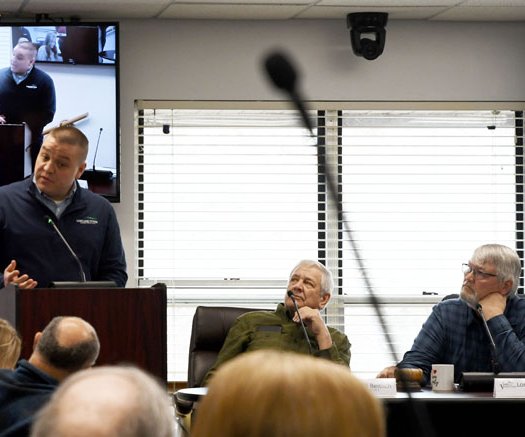
MONROE COUNTY -The Monroe County Climate Change Task Force (CCTF) continues to forge ahead with efforts to increase the county’s climate resilience. Two of those efforts in the last six months involved learning about other counties that have developed Climate Action Plans, and about their efforts to implement those plans.
In August, the group travelled to Dane County where they heard from Kathy Kuntz, Director of the Dane County Office of Energy and Climate Change. Then, at their December meeting, Task Force members heard from Dillon Constant, La Crosse County Planner, about his work to lead a team in developing a Climate Action Plan for their county.
Dane County
“In 2017, the Dane County Executive created our office. It was a moment where there was not state or federal leadership on climate change, and he was feeling that there was a lot of pressure from residents that something needed to happen,” Kuntz explained. “Our office has lived in two phases. The first phase was a planning phase, where we convened people and created our Climate Action Plan. I took over in 2020 and I'm an implementer. So, we moved from sort of having a vision to now let's get things done.”
Kuntz pointed out that because Wisconsin is viewed as a politically ‘purple’ state, the percentage of the population that is concerned about climate change is expected to be lower than the national average of 63%. She said that Wisconsin’s score, according to Yale Climate Opinion Maps 2024 is 59% (Minnesota is 64%, Iowa 58%, Illinois 65%, and Michigan 60%). She said that in Wisconsin, Dane and Menominee counties have higher scores of 73% and 71%. Monroe County, she said, comes in at 55% (Crawford at 55%, Vernon at 59%, Richland at 53%, Grant at 53%, and Sauk at 61%).
“We have four big climate goals, two that are internal to our operations, and two that are county-wide,” Kuntz told the group. “For our internal goals, we wanted first to make sure that all the electricity we used in the county was 100% renewable offset. We wanted to do that by 2025 we actually did it in 2023. So, that one is checked off. The second internal goal is we want our facilities, our fleet, and our land operations, to be carbon neutral.”
Kuntz said the other two county-wide goals are to cut county-wide emissions in half by 2030, and to achieve county-wide carbon neutrality by 2050.
Kuntz said that Dane County’s operations include diverse facilities, from the airport to the zoo, the meeting arena that hosts World Dairy Expo, their public health and human services facility, the sheriff’s department, county jail and 911 service, the highway department, a landfill for county-wide garbage, and 25 county parks and 20 wildlife areas.
Internal goals
Kuntz said that in efforts to address the first internal goal in the early 2000s, they had begun to convert landfill gas to electricity, and to install rooftop solar arrays on their buildings.
“As time went on, and due to growth in solar and wind installations, the electricity generated from landfill gas became less desirable,” Kuntz said. “For this reason, we shifted away from generating electricity to producing renewable natural gas (RNG). She said that because the RNG plant at the landfill is located on top of a natural gas pipeline, they are able to sell their gas as a transportation fuel. The plant also accepts manure from larger dairies in the county to be digested.”
“When we made the switch at the landfill, we lost our status as using only renewable offset energy,” Kuntz said. “To regain that 100% status, we’ve focused on more rooftop solar, and also partnerships with utilities on solar projects.”
Kuntz said that in order to achieve their second internal goal of carbon neutrality, they must reduce their emissions and increase their carbon sequestration on their grounds and public lands. She said the other big area to tackle is total fuel expense and emissions for their buildings and vehicles.
“What we're essentially saying there is we have emissions from our buildings, the natural gas we use to heat buildings. We have the diesel and gas we're using in our vehicles, and then we have the sequestration that is calculated every year,” Kuntz said. “As we put more land back into prairie, we're sequestering more carbon in the soil.”
Kuntz said that back in 2020 when she first started, the big bulk of the county’s emissions was from electricity from the grid. She said that Wisconsin’s electrical grid remains relatively dirty. But then, the solar arrays from their partnerships with utilities started to come online, so that by 2024, they went a full year with all renewable energy offsetting the county’s electricity usage. She said that all of this dropped the county’s total emissions from facilities and fleets by 60%.
“What that leaves is the natural gas and propane that heat our buildings, and the steam heat downtown, and diesel and propane vehicles, and gas vehicles,” Kuntz said. “We also have a fair number of compressed natural gas vehicles. The CNG emissions are so small you can't see them on my graph. They're there, but it's tiny. It just doesn't show up.”
Kuntz said that every year, she also meets with all the departments within county government to discuss their fuel costs and emissions, and try to identify opportunities for them to improve.
“So, for example, the airport has a lot more emissions from their buildings than their vehicles, whereas highway is almost all vehicle emissions,” Kuntz explained. “In these discussions, we talk about where they are and what their opportunities might be. And it's not the case that we're saying you have to do X and Y. It's more a conversation about opportunities. What are you thinking about those? Which of those might happen?”
Kuntz said that with her background in behavioral science, she understands that motivation comes from recognition. So, when departments take steps to improve their emissions, her team highlights that and makes sure they get positive reinforcement for taking the steps they have.
County-wide goals
Kuntz explained the obvious, which is that the county government has control over their own internal operations, but cannot mandate that actions be taken in municipalities within the county.
“As counties, we can't mandate action - cities, villages, and townships can opt out,” Kuntz said. “And in Wisconsin, there are a lot of issues related to climate where the state has passed laws saying local governments can’t exceed state standards, for instance for building codes, regional transit, EV infrastructure, and plastic bag bans, to name a few. So it really means we have to think creatively about, how do we influence change? Because we're not mandating it, we're influencing it.”
Kuntz said Dane County’s best strategy as an influencer is to ‘lead by example.’ That way, she said, we get their own house in order, experience barriers and challenges, and can help others interested in taking action navigate those challenges.
“We did a solar project with Alliant Energy, and before it was turned on, the Village of McFarland reached out to express interest, and asked for help in talking with Alliant about their 100% renewable offset goals,” Kuntz shared. “The result was that McFarland replicated what we did with their school district, which is awesome.”
Kuntz said another key strategy for them is celebrating climate leadership, “so that it’s contagious.”
“We run a Climate Champion Program, and have recognized more than 150 local governments, businesses, and non-profits across the county in a dozen categories,” Kuntz told the group. “You can be recognized for having a really energy efficient building, for having a clean fuel fleet, or for having a workforce that has amazing commuting patterns. Some of our entities have two-thirds of their employees bike to work, for example. This has been, especially with our local governments, super powerful. To be clear, as a Climate Champion, what they typically get from us is a congratulations.”
Kuntz told the story of a time where she was making a presentation to the City of Sun Prairie. The City Administrator told her there was one thing that really annoyed him. She braced herself to hear what it was, only to learn that he was annoyed about receiving e-mail messages from the City of Middleton, with a message at the bottom about how they are a Climate Champion.
“And I said, don't you think the way to get less annoyed is to become a champion, so that you have that in your email signature too?” Kuntz remembered. “Now, the City of Sun Prairie has more Climate Champion Awards than any other community in Dane County.”
Kuntz said another role the county has played is understanding the funding and regulatory frameworks, so they can assist other municipalities and groups in the county with taking action.
“How do we reduce barriers? One example is we currently have a federal grant to install more electric vehicle charging in areas where the private market is unlikely to do it. So, we’re trying to make it easier for folks to make the transition to electric, but more often, we're making it easier through information than money, because money's tight. We reduce the barriers to action, and we partner with everyone.”
Kuntz said her department also runs an online group composed of municipalities and school districts called the Sustainability Collaborative. She said she provides members with a monthly newsletter, and occasional meetings where members can network and brainstorm, and share ideas.
As a result of all of this, Kuntz shared that although Dane County’s population increased 7% between 2017 and 2022, their total emissions declined by 3%, and their emissions-per-person declined by 9%. She said that 41% of the county’s emissions are from electricity, 26% from natural gas and other heating fuels, 25% from transportation, and 8% from other sources combined.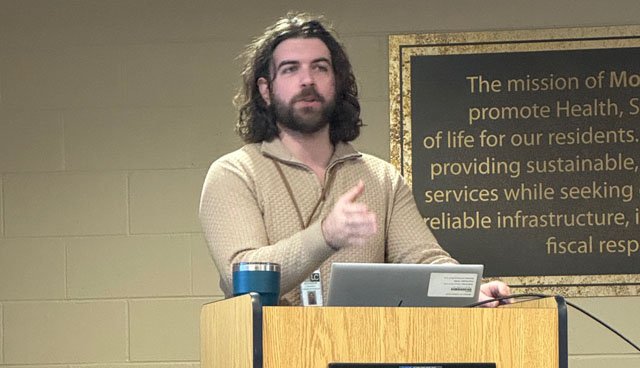
La Crosse County
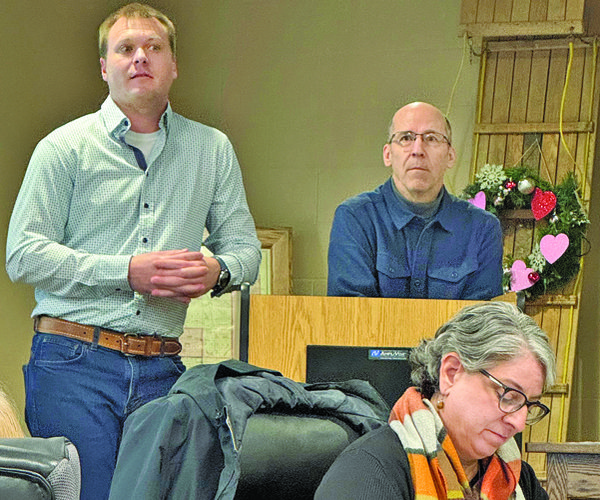
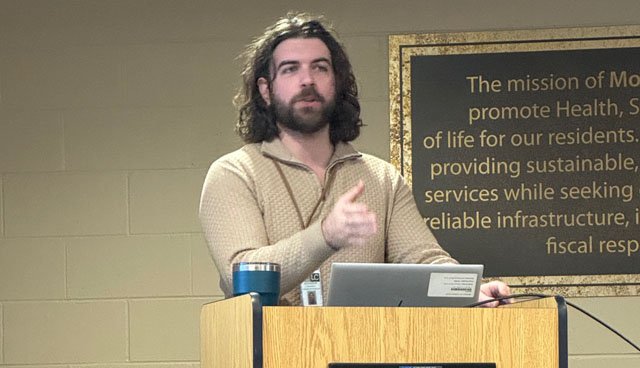
At the CCTF’s December meeting, La Crosse County Planner Dillon Constant provided a presentation on the Climate Change Action Plan they had developed.
“I was tasked with drafting this up in house when I was hired about three years ago in the Department of Zoning, Planning and Land Information,” Constant told Task Force members. “I had no previous sustainability Climate Action Plan experience, so for about the first eight months I tried to become as much of an expert as I could be in this subject area. Planners are really generalists in a lot of aspects of government, knowing a little bit about a lot of different things. I'm also the lead on the county's Comprehensive Plan, and the sustainability guy. I don't really have the title, but I'm the sustainability guy.”
Constant said that the directives that guided development of the plan were the overall goal of achieving carbon neutrality by 2050, goals set forward in the county’s Comprehensive Plan, County Board Strategic Plan priorities, environmental stewardship, and carbon reduction.
“Development of the two-part plan was staff-led and data-driven, with everything in it quantified,” Constant explained. “It’s one thing to be committed to the idea, and another to start talking about spending money on it – so we wanted everything in there to be backed up by solid numbers.”
Developing the plan
Constant said he’d started by finding examples of plans developed by other counties, convening peer groups, and relying on the help of county interns to do some of the work.
Constant said that one key contact that facilitated development of the plan was joining the Wisconsin Local Government Climate Coalition.
“They had already done a lot of the work. It's all there. And we aren't reinventing the wheel with any of this. A lot of this is derived from somewhere else. So that was really encouraging,” Constant said. “We took a lot of inspiration from other people and didn’t waste time trying to reinvent the wheel when we know something works.”
Like Eau Claire County’s plan, the first part of the plan focuses on county government operations, and the second part on ‘community sustainability.’
In the carbon neutral county government part of the plan, the focus is on buildings, energy, and their fleet. They recommend policy changes, collect data, and formulate benchmarks for success. From this work, they are also able to compute cost-savings for the county.
In the community sustainability part of the plan, the focus is on the more rural areas of the county, working through the Land Conservation Department, and also focusing on disaster preparedness and resilience. Another key focus is on reducing solid waste and diverting waste from the county’s landfill.
Involving the towns
Constant said that one priority for him in developing the plan was to ensure that the voice of rural, township residents was heard in the process. He said that La Crosse County has a total of 121,000 residents, of which 35,000 are township residents.
“We did a lot of intense outreach engagement in the townships, in the suburban communities, as well as the urban core of the City of La Crosse,” Constant remembered. “That's where we first started to see that the cities were already going towards climate action, but now we're also hearing from residents in the rural areas that sustainability, climate action matters to them.”
“Beyond internal county government operations, we pondered our geographic scope, and decided that the cities have or will have their own plans, and that since our department really works in the towns, we were going to focus on the towns.” Constant said. “I think rural areas are often left out of the conversation about sustainability and climate action, and they care about those things in their own way. Their concerns are going to be different than urban concerns. So we tried to frame it from that angle.”
Implementation
Constant said that since the plan was written and approved, he had brought in a lot of money in the form of grants to help the County implement the plan. In total, Constant estimated that by devoting staff time, and not outsourcing the work, his team has saved the County about $400,000. He said that it wasn’t until the 2026 budget cycle that the county had devoted funds to implementing the plan. In 2026, they have budgeted $250,000. He said its still unclear how the funds will be spent, especially with so many state and federal grant programs being eliminated or de-funded.
Constant said that work the county had done with sustainability initiatives, and tracking key indicators, starting in the early 2000s had put them ahead of the curve when it became time to start to implement the plan.
“In the 2000s, we had a series of building upgrades, improving our energy efficiency downtown, converting to LEDs, putting aerators on faucets, and adding smart thermostats. So, we were really pretty far along on decarbonizing or making our building smart and efficient,” Constant observed. “We had been collecting data since 2012 on our electricity use and cost at all of our facilities, paper use, and water use. Eventually, we started tracking emissions. We have a good 10 years of tracking, which is very helpful to show our trend over time of reducing or increasing our usage of different buildings and fuels, and all these things that contribute to climate change.”
He said that La Crosse County has also done some really cool stuff with solid waste partnerships with Xcel Energy. We're diverting hundreds of thousands of tons of waste from the landfill, and they're going through and seeing what they can burn to generate electricity on French Island. So kind of a cool partnership that extends life of the landfill and generates some electricity.”
After the plan was approved, Constant said they’d gotten several grants to support two fleet assessments. In the course of that, they put sensors in their vehicles for a four-month duration collecting data, and monitoring in the winter through spring. Then, working with an intern, they conducted an energy bill audit.
“This was something our GIS intern helped with a lot, punching in bills for the last three years and getting everything automated so they auto-upload from EPA’s Energy Star. That program might have had its funding pulled to be privatized. If that goes away, that would really be terrible,” Constant said. “Then we did an employee commute survey, and got a pretty solid response rate. We added the greenhouse gas assessment to our indicators for the first time for 2023, so 2022 data, to actually quantify what is our actual carbon footprint.”
As far as the community engagement part of the plan, we started with doing some public open houses in rural areas, distributed a survey to township residents, attended La Crosse County Dairy Breakfast, and have convened a Community Advisory Team.
He listed implementation successes as solar installation at six sites, a Focus on Energy building audit, a micro-grid study, updating the zoning ordinance, purchasing two electric vehicles for their fleet, updating their procurement policy, and receiving funding in the 2026 budget.
Metrics of success
Constant listed how success would be quantified for implementation of the Climate Action Plan. He listed the following metrics of success:
• Annual Sustainability Indicator Reports
• Long-term savings
• Reduction in their carbon footprint and emissions
• Reduction in energy use and energy expenses
• Reduction in fossil fuel use and expenses
• Increase in green spaces and carbon sinks
• Improvement of surface water quality
• An increase in recycling, a reduction in landfill waste, and extension of the life of the landfill.