It seems everyone, from the Vernon County Board of Supervisors to landfill staff to members of the Town of Viroqua Landfill Siting Committee (town committee) are frustrated at the slow pace of determining the Vernon County Landfill’s future.
The topic was addressed at a joint meeting of the Vernon County Infrastructure Committee and the town committee, held on Friday, Jan. 23, with the town’s attorney Anders Helquist present. The purpose of the meeting was continuing negotiation of a Town Host Siting Agreement.
The two committees shared their frustrations about the timeline.
“The county is as frustrated as everyone else with the process having taken as long as it has,” Vernon County Administrative Coordinator Cassie Hanan told the group. “There have been delays in multiple areas, but I don't see that as signaling anything worrying. DNR themselves has told us that it is not unusual for this process to take as long as it is taking.”
Attorney Helquist queried them about an estimate of when DNR might be expected to make a final determination about the expansion.
“We were told, essentially from the date that the addendum gets submitted to the DNR, that it would be approximately 10 months before we would have a decision one way or the other,” Hanan responded. “That 10 months includes the 30-day public notice in which anyone can request a contested hearing. We anticipate that a contested hearing will be requested, so that that timeline would include that contested hearing.”
Helquist then asked if the landfill, facing airspace constraints, would be able to continue to accept trash without the expansion for the duration of the expansion application process?
“At current waste capacity? No, the county is working towards getting a license for the county to transfer waste,” Landfill Manager Stacey Sanborn responded. “In the interim, until we know about the landfill expansion, to conserve the remaining airspace of the current landfill, the county is considering hauling to either La Crosse or Monroe county.”
Helquist was informed that trash volumes for 2026 are projected at 10,000 tons. He asked if the low projected volume is due to airspace constraints or to historic customer volumes?
Sanborn responded that the projections are based on 2024 customer volumes.
Helquist noted that the projected volumes are quite low, and asked if the decrease is impacting the county’s ability to operate the landfill efficiently and safely?
“The county has purchased an alternative daily cover system to address the litter concerns and the odor concerns,” Sanborn responded. “It's a hydro seeder that sprays on an application of a mixture of bentonite clay and recycled plastic fibers. It should help conserve airspace, and you can mix a scented agent into it to help mitigate the odor concerns.”
Sanborn explained that the sprayed mixture looks like the consistency of pudding, and as it dries it creates a crust. She said that once you drive over it with the compactor, it busts up and you don't even know it was there.
“Instead of putting on six inches of sand and adding all of that airspace, now you've just got this thin layer of crust,” Sanborn said. “We're not the only landfill in the state utilizing the system. Adams County has moved to it, and Dane County uses it.”
Sanborn told the town committee that she is in the process of having the current landfill’s airspace projection adjusted, as a result of the new cover system deployed.
History of expansion
The county board originally approved plans to expand the landfill in October of 2023. Working with the engineering firm SEH, the county submitted an expansion application to DNR in 2023, and on December 19, 2023, received the first of what would become two ‘notices of incompleteness’ from the agency.
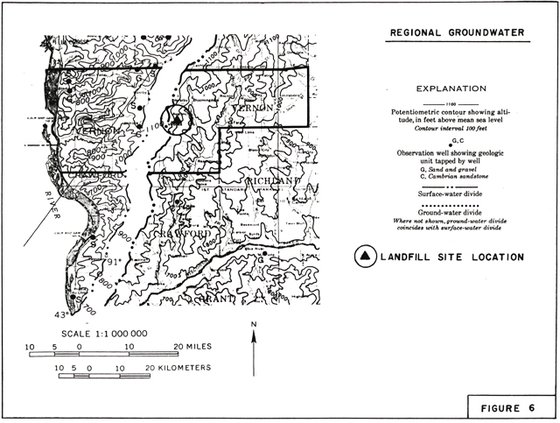
In response, they received a ‘notice of incompleteness’ from DNR on December 19, 2023, asking for further investigation of the groundwater flow beneath the site and other questions.
The county originally spent $950,000 to generate a 3,000-page feasibility study which was submitted to the DNR Waste and Materials Management Program. Then, in early 2024, the board appropriated another $300,000 for a ‘Plan of Development.’
The board then dedicated an additional $750,000 for more DNR-required investigations, including rotosonic drilling of additional monitoring wells, to satisfy DNR’s questions in the first ‘notice of incompleteness.’
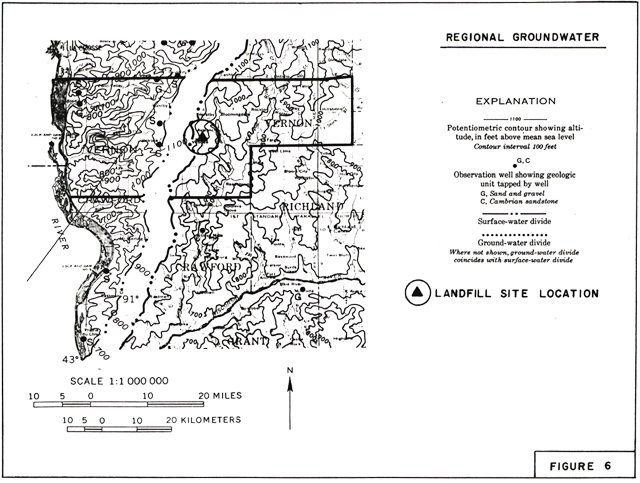
Then, in March of 2025, the county received a second, ‘notice of incompleteness’ from the DNR that was unanticipated by SEH. The agency continues to question the hydrogeologic conclusions about the suitability of the site for a landfill put forth by SEH hydrogeologist Melanie Niday, and warns that if their questions cannot be answered, DNR may see the need for an Environmental Impact Study (EIS) for the project.
Were this to happen, it could obligate the county to expenditure of another $300,000 to $400,00, with no guarantee the process would reach a favorable conclusion supporting their expansion application.
Host agreement
In April of 2025, the town committee’s attorney submitted a 32-page proposed Town Host Siting Agreement to the Infrastructure Committee. After five months, the county responded by providing a 15-page proposed agreement based on a landfill siting agreement negotiated by La Crosse County in 2021.
Helquist pointed out this has put the county and town negotiator’s in the position of having two documents to consider, and has not addressed the most important concerns raised by the town committee. He asked why the county had elected to take this approach?
“There is a minimum that a county is expected to follow, and our proposed agreement is based off of other landfill agreements,” Hanan explained. “We also tried to consider a little extra, to be fair.”
Helquist asked if the La Crosse County Landfill is faced with water quality threats related to an underlying karst bedrock geology? Sanborn said she did not know the answer to that question.
“What we're doing as a committee is trying to address the particulars of this site, and the unique nature of this site, and the concerns about threats to water quality that have been raised by the public,” Helquist said. “These include concerns with leachate and other contaminants going through the karst into the groundwater. What we hear from the county is there's no red flags, there's no yellow flags, there's no concerns at all. If that's true, if that's the way it turns out, it's great. But, the town wants to ensure its residents are protected and have the fallback in case the experts are wrong. What if the county is wrong?”
“It isn't on us - it's the DNR,” an Infrastructure Committee member said. “We trust and pay the DNR millions of dollars to test and monitor our wells, and we’ve had 30 years in compliance. What people are saying that the landfill is contaminating groundwater isn’t true or the DNR screwed us all.”
“It's not on the DNR to make it right if the DNR is wrong - it's the county's landfill,” Helquist responded. “If the leachate containment system fails and contaminates the groundwater, the DNR isn't the one coming to the rescue to compensate the landowners and to provide potable water. DNR isn't going to be footing that bill. What concerns the town is, what if the DNR is wrong?”
Helquist said that if the county is very confident that the DNR is correct, that their geologists are correct, then there should be no problem and no cost to the county to put in some protections in the event there is a failure.
“I looked through this agreement. The committee looked through this agreement and water protections if the landfill fails, if there's leaks, if there's the karst issues, even though the DNR says it won't happen,” Helquist said. “What in the county’s proposed siting agreement protects those that are right next to the landfill or in the town if their water is contaminated? Is there anything in this agreement that provides that backup protection from the county as the operator of the landfill?”
County Board and Infrastructure Committee Chair Lorn Goede responded that the question is a moot point until the county knows if DNR will approve the expansion. Hanan said the county is relying on the expertise of their engineering firm and DNR scientists, and the experience of other counties that operate landfills.
Helquist emphasized that water protections are of utmost importance to the town. He stated that if the county believes DNR and their engineering firm are correct in their analysis of the safety of the proposed expansion, then there should be no problem for the county to include water protections in the Town Host agreement.
Supervisor Alycann Taylor, not a member of the Infrastructure Committee, encouraged the county to make an effort to understand what the town’s concerns are that are not addressed in the proposed agreement provided to the town by the county.
“We're trying to get to points in the agreement that you got from the county that weren't addressed, right?” Taylor said. “You're trying to outline things that you wish would be considered?”
Helquist pointed to a sentence in the county’s proposed agreement describing what would happen if the county were to cease operations at the landfill.
“You look at the second sentence there, in the event that the county ceases to accept solid waste at the east expansion, for whatever reason, the county may, at its sole discretion, terminate this agreement upon 60 days written notice to the town,” Helquist pointed out. “That means that if you stop accepting waste you can just terminate this agreement. You can terminate the town host payment. You can terminate any protections that are negotiated. That's a giant loophole and we wonder why are we negotiating, if you're going to be able to turn around and essentially cancel the agreement. That doesn't protect the town at all. Lawyers like talking about loopholes, but this is one of the biggest loopholes I've seen in a contract. It's things like that that set the tone the wrong way with this response from the county.”
Existing landfill
The two parties discussed the fact that a town host agreement had never been developed for the existing landfill. The town thinks the agreement under discussion should cover both the existing landfill and the proposed expansion.
Taylor explained that negotiating just for the expansion, with its future unknown, is cumbersome enough, without also including the existing landfill.
“Our initial proposal was to have the town host agreement applied to the current landfill and the expansion,” Helquist stated. “The idea is this applies to the landfill as a whole, and certain things get triggered with the expansion occurring.”
State codes
Sanborn explained that the committee had removed things that are mandated by state code from the county’s proposal, saying that having them in the agreement is redundant.
“Regarding those things that are in the state codes that were incorporated into the town’s proposal, I think we've heard from multiple people today that the DNR is short staffed, and doesn't even have the capacity to even review your application,” Helquist responded. “Including those things in the agreement provides a mechanism that allows the town, if the county is not doing its job, to seek a remedy, because we don't expect the DNR is going to have the capacity to enforce the provisions that are in the state code.”
Sanborn stated that a lot of what the town is asking for is mandated in state code, and would typically be incorporated simply by reference to accommodate any changes in state code.
“The town wants an enforcement mechanism in the event the DNR is unable or is unwilling, to have some type of remedy,” Helquist reiterated. “These provide the town a contractual basis to ensure the county is following DNR codes, and any differences when the codes are spelled out. Is there a reason why you would not want the town to have some additional ability to ensure that the codes are being followed to protect the residents?”
One document
Helquist went on to say that other things the town has asked for are included in the agreement because they won’t be included in the county’s Plan of Operation for the landfill.
“Can we go back to the drawing board and work off the town’s proposal, and adjust the languages as you would like, so that we're working off of one comprehensive document?” Helquist asked.
Goede responded that until the expansion application is approved, the county doesn’t know what is going to happen. He said that makes negotiation difficult.
“We as a county board did approve the expansion. That vote has not changed, and we have not changed that. So we are operating as if we are expanding the landfill,” Taylor commented. “There's been a couple of comments about that that just don't sit well with me. I think it's prudent to hear what the list is, take it back to committee, and see if their proposal is better than the one we did, and then come back with a response. I don't understand what we're doing right now without collecting the information.”
Taylor said she is approaching this as the opportunity be collaborative, to work with their neighbors, to come up with a town host agreement that works for both the county and for our place where the landfill lives.
“I think in the interest of collaboration and, quite frankly, clarity and efficiency, let's get through the list that they want us to consider, and then go back as a committee and see which model is best, our proposal or their proposal, and start working on the issues,” Taylor said.
Town’s priorities
Goede stated that he understood that water protections are important to the town, and asked what the town’s other priorities were.
Helquist listed water protections, provisions on surface water runoff and leachate management, sociological impact payments for living next to the landfill, property value guarantees, damages for any breach, enforcement of hauler routes, prevention of blowing litter, odor abatement, and some form of teeth for enforcement in the agreement.
The Infrastructure Committee agreed to take up the proposed host agreement at their February meeting. Setting another joint meeting was put on hold to give the county time to discuss the matter, and for DNR to move forward with the approval process.