It was Fork Farms Distribution Day at the Southwest Wisconsin Technical College (SWTC) campus on Aug. 13, as Fork Farms, a company operating out of TitletownTech in Green Bay, distributed their “Flex Farms” to 22 area school districts.
A Flex Farm is an indoor, hydroponic growing system that can grow up to 394 pounds of fresh food a year, while taking up only nine square feet of space.
They’re primarily used to grow leafy greens, herbs, and fruiting plants.
Flex Farms has been used in food service, as well as in the classroom in many Wisconsin school districts, as well as some college campuses, including SWTC, but now they have made their way to southwest Wisconsin through strategic partnerships with local schools and businesses. The Cummins Foundation provided a grant to help fund the initiative, and Rockwell Automation is supporting the project’s technological and automation components.
SWTC Interim President Caleb White said a few words to the area teachers, state officials, and SWTC representatives, before turning it over to Randy Romanski, Wisconsin Secretary of Agriculture, Trade, and Consumer Protection, who referred to the Flex Farms as “an investment in education and training” in Wisconsin’s $16 billion agricultural industry, which Romanski stated accounts for 10 percent of all employment in the state.
Romanski went on to explain that in other districts that use Flex Farms “the kids know the difference between the greens” purchased or grown with a Flex Farm.
Wisconsin Deputy State Superintendent Thomas McCarthy also spoke briefly, stating the Flex Farms, when used in a classroom setting, promotes “student engagement” which is as he explained a popular “vocabulary word” currently with the Wisconsin Department of Public Instruction.
Alex Tynik, Fork Farms President and CEO, explained his company and their Flex Farms aim to “put fresh food within reach of everyone,” as well as “inspire and equip the next generation of growers.”
The presentation and training session for Flex Farms was then lead by Josh Mahlik and Anna Brant, Fork Farms Partnership Development Director and Partnership Success Representative who began with showing a CBS Morning Show clip featuring the company which referred to them and the Flex Farm as a “fresh take on cafeteria food,” and explained how the greens, herbs, etc., are grown and picked in school with no soil, and how they use circulating water and LED lights.
After the clip, Mahlik explained how nearly 95 percent of all fresh leafy greens are grown in either California or Arizona, meaning that “our food travels much farther” which effects its freshness.
Flex Farms obviously cuts down on travel, and can also, according to Mahlik, grow 45 times more food per square foot.
25 pounds of food can be grown in one Flex Farm, producing 300 servings per harvest, at around 12 cents a serving.
He also stated students who use the Flex Farms in the classrooms are more apt to eat their grown greens in the lunchroom, and some school’s FFA has used them to grow items for their fundraising plant sales.
A “how to assemble” session then followed in which Brant stated that the whole approximately 45 minute set up can be done with only a Phillips head screwdriver.
The 22 area school districts were then given their Flex Farms, which came in three, for the most part, lightweight boxes.
During that time, Gov. Tony Evers arrived and met with SWTC officials and was shown an on display Flex Farm by Mahlik.
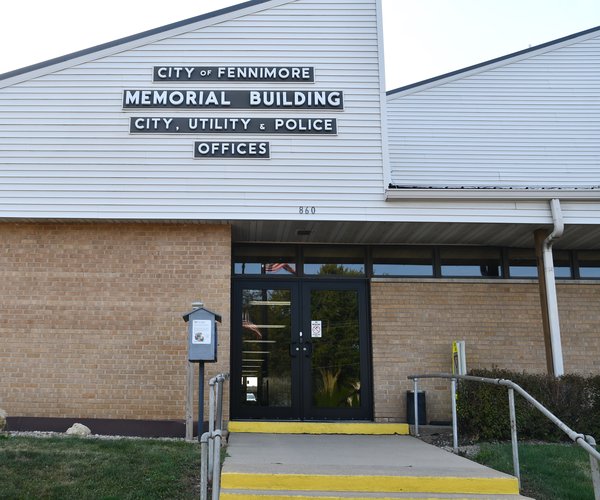
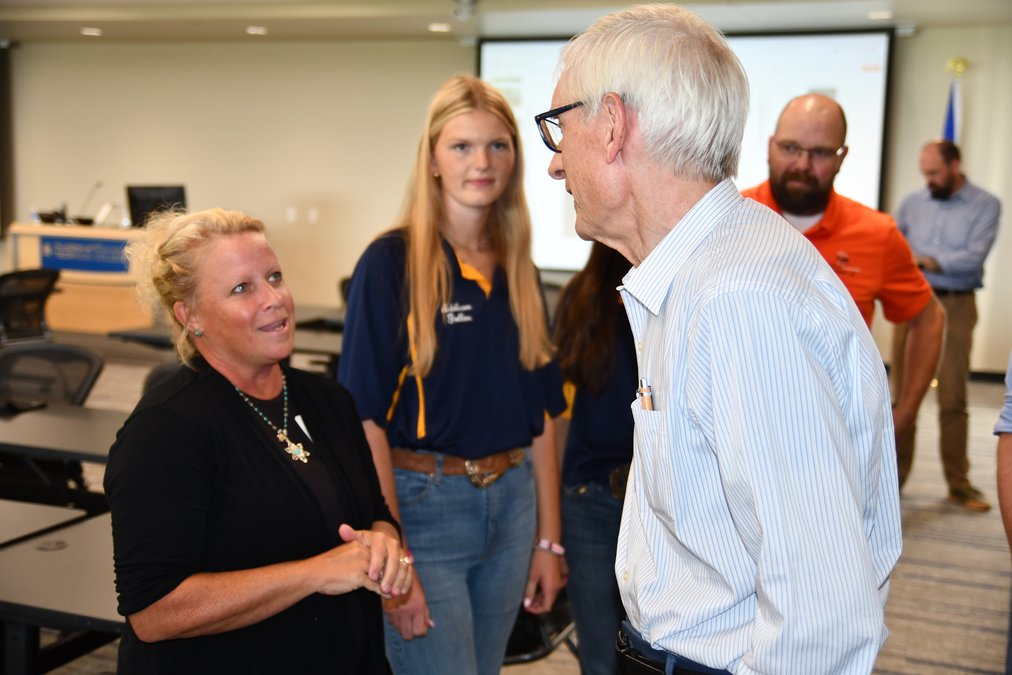
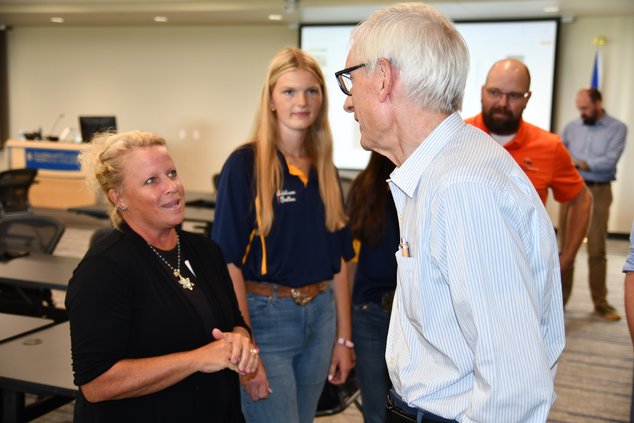
Evers then met with some of the educators in attendance, including Fennimore Middle and High School Agriculture Instructor and FFA Advisor Shelby Mitchell.
Mitchell, who has been with the Fennimore School District since 2005, stated to Evers that she was first of all, “very excited” to move into her new facility, possible from the school’s recent referendum, and also informed him that she plans to use the school’s Flex Farm in her plant and food science classes, and that the middle/high school would be using her lettuce and tomatoes grown in her classes in the cafeteria.
Mitchell also pointed out that the school already was using localized beef for school meals.
After a few more hand shakes and chats, Evers then assisted with loading the last few of Flex Farm systems into pickup trucks and vans.
Evers ended his 45 minute visit to SWTC by speaking briefly to the media, referring many times to Flex Farms as “a good program” and that he has “seen them all throughout our state.”
“Kids learn how things grow,” he went on to say, and pointed out that food banks have also starting to use them.
Evers also referred to Fork Farms as a “really important state start up company right in Titletown (Green Bay). They are creating jobs in our changing agriculture across the state.”