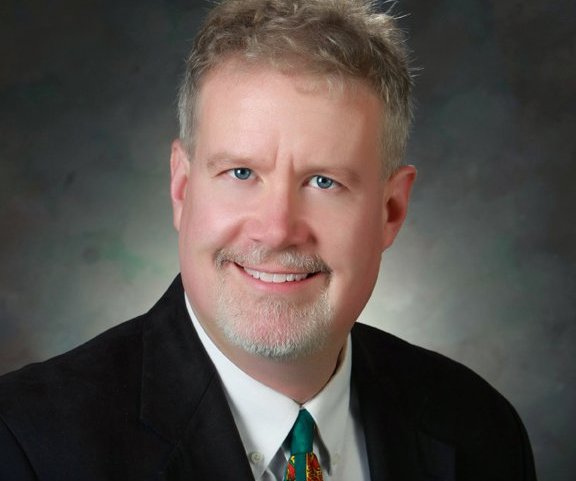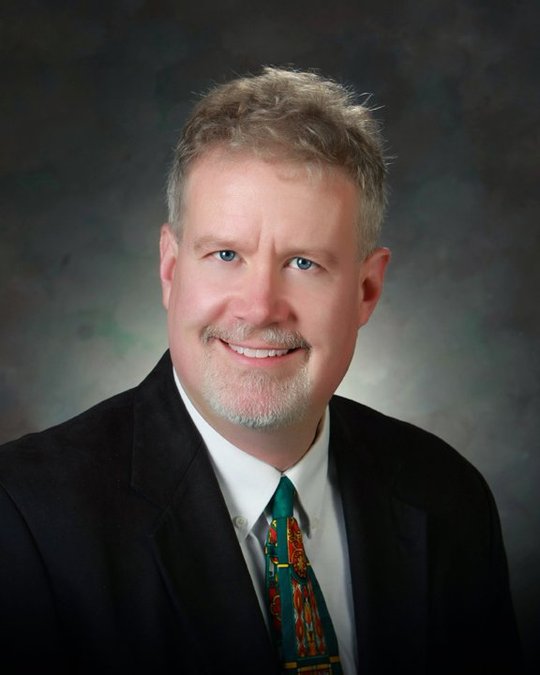
PLATTEVILLE, Jan. 28 — The most intriguing email I got this week mentioned Platteville native and Platteville High School graduate Verne E. Edwards, who authored a book I wish I had read as a UW–Madison journalism student, Journalism in a Free Society.
Edwards was chair of the journalism department at Ohio Wesleyan University while also working for the Milwaukee Journal and other daily newspapers.
Edwards wrote in the book in 1969: “So long as Americans intend to rule themselves, rather than trust some authoritarian government, unfettered press surveillance will remain crucial. The right to vote and to petition for redress of grievances means little to citizens without unrestricted information on government policies and practices.”
Everyone, regardless of party affiliation or lack thereof, should support that admonition. The First Amendment does not apply to only the news media, nor does it apply only to religious people, nor does it apply only to those critical of the government, whoever is in charge.
I haven’t read Edwards’ book (though a copy was on the way to my office as I was writing this). Suffice to say a few things have changed since Edwards was writing and teaching. The news media is bigger, including new media outlets and those who call themselves “citizen reporters,” who may or may not have received any journalism training at all. The assumption of general impartiality and objectivity among reporters — a period shorter than you think in American history — appears to be on its deathbed if not already buried.
New sources of national news are due to distrust in what some call the “legacy news media” — the networks and major daily newspapers — along with too many journalists who think their role is to insert their opinion and change the world instead of reporting what is happening so that the reader, listener or viewer can decide. And, let’s be honest, growth in the number of Americans who want to read, listen to or watch what they agree with and don’t believe what they don’t agree with.
Readers know that I have had two unintended public encounters before audiences since I’ve been here — when Madison Catholic Bishop Robert Morlino legally incorrectly asserted he didn’t want news media at his talk at UW–Platteville in 2014, and when the organizers of the Get Out the Vote anti-Trump rally in Belmont in 2024 decided they didn’t like my reporting of how and why the event moved from Platteville. I think it is possible that some people at the former event cheering on my standing up to Morlino may have been booing (literally) my work a decade later. At least I have good stories to relate for my autobiography.
One of these things is like the others: Observant readers of our recent coverage of proposed data centers in Grant County and readers of our coverage of proposed wind farms and big solar arrays might notice that opponents of all three are the same people, as are some proponents.
There are opposing arguments common to all three — destruction of quality farmland, damage to the aesthetic reasons people live in and visit the Driftless Area, possible environmental impacts particularly in water quality and use, and steeply higher electric bills caused by mandated “green” energy in the first two cases and huge use of electricity for data centers — that could be encapsulated in the observation that others benefit while this area absorbs the costs, financial and otherwise.
The proponents seem to include most of our elected officials based on their lack of public comment. Grant County is getting almost $1.6 million in lieu of property taxes for utility projects including Alliant’s Grant County Solar Farm and Battery Energy Storage System. The Town of Potosi is getting almost $454,000 from its solar farm. It is also plausible that most of our elected officials think the opponents of these projects are wrong in their views, but their constituents probably would prefer to hear that from those put in and kept in office by voters. Whether voters think the tradeoff of government money (how are your property taxes?) vs. the downsides is a good bargain may be determined by spring election results, or not.
The anti side is certainly louder than the pro side, as demonstrated by the tilt of comments at the second of the two Badger Hollow Wind Farm testimony sessions in Linden last summer. That could mean that most people support wind and solar farms and data centers here but don’t want to speak out. That could also mean that most people don’t have an opinion for or against.
On the brighter side: Lest you think from headlines that our world is going to Hell (which is always the case), read our page 1 story and our first Letter about how a group of Platteville churches and organizations worked with great speed to provide a warm place to spend three really cold nights last week.