Fall mushrooms, the fruiting bodies of fungi, may not excite gatherers as much as May morels do but their shapes, colors, smells, textures, and mystery know few challengers.
Red, white, orange, purple, tan, yellow, and speckled are a few of a rainbow of colors adorning mushroom caps.
Some are unique and carry their geometry forward being known as puffballs, corals, earthstars, bird’s nest, tooth, bracket, and cup fungi.
Destroying angel and dead man’s fingers could be used in a Halloween decoration. A few could act as note paper by bruising the bottom of the cap where the pores flourish.
Who could read this newspaper headline without pausing and pondering, “Conspiracy theories over Epstein death mushroom?” Did the kitchen cook slip Mr. Epstein a side of Amanitas or was the editor using mushroom as a verb, not a noun? It was the latter.
Mushroom almost immediately conjures up poisons and some mushrooms do make humans sick, cause death, or have been used to inflict pain. We are fortunate that poisonous mushrooms are not poisonous to touch like poison ivy.
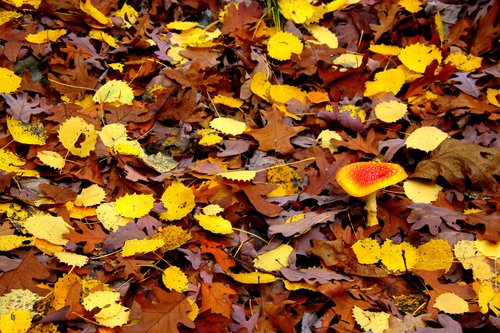
Not all poisonous mushrooms poison all animals. Dogs and cats have died from ingesting certain mushrooms, while squirrels seem to feast on many varieties without illness.
Several edible wild mushrooms are now being collected and unless someone is allergic to certain mushrooms, as some people are to morels, there are plenty species to consider. Chicken of the woods, hen of the woods, puffballs, and oyster mushrooms are a good start.
Know the species. There isn’t one character all poisonous or all edible mushrooms have.
In general, it has been a very good summer and fall for mushroom growth. Let’s hope that is true for morel mushrooms, too, which grow underground in summer and fall and then push a fruiting body above ground in spring. Fall weather is one of several factors that determine how plentiful morels will be in spring.
While difficult to imagine, one mushroom species, nicknamed the humongous fungus, grows in Oregon, covers 2,385 acres underground, weighs an estimated 35,000 tons, and has been estimated to be 2,000 years old. The body of this individual fungus is composed of thread-like stands.
All the hunters, anglers, and ginseng diggers must have noticed the dozens of kinds of mushrooms popping up in pastures, woods, marshes, and growing out of trees or fallen tree trunks.
Bret Schultz, of Black Earth, Wisconsin may have walked past, over or on them but says he never notices. His mind is on fly-fishing, tiny Mayfly hatches, and looking over his should at the dreaded October 15 Wednesday when the trout season ends. He probably doesn’t know ring-necked pheasant season opens Saturday, October 18.
There is a challenging tiny Mayfly hatch that goes on for weeks that has challenged Schultz now that the hopper activity, while still going on, is less interesting but still dependable.
“It is the smallest Mayfly I try to tie, requiring a size 22 hook. You might catch a few fish in an area where the hatch is going on but basically the fish become locked in on this tiny pattern. Imitating it with a larger pattern won’t work either,” he said.
It would have to be the worst of weather and muddy water for Schultz to stay away from water on this last day.
While trout anglers are putting their gear away or tying flies for January 3, 2026, others have turned their attention on small game hunting, turkey calling and deer stand safety.
Shagbark hickory and black walnut gathering has at least alerted this group to begin scouting and then waiting for frost to hasten the drop.
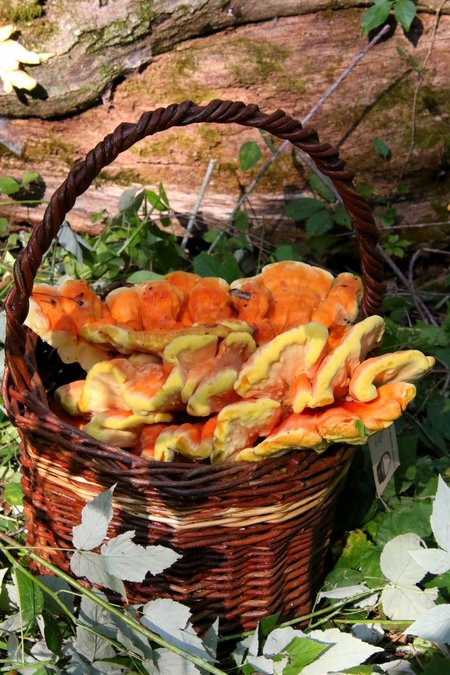
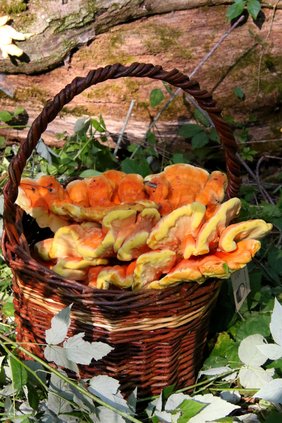
Shutterbugs are zeroed in on the most photograph-friendly season. Large and small, red and white, fruit and leaves, and water and sky are there to be noticed. Sounds strange but while leave seekers might prefer a bright, sunny day, overcast, even drizzly weather puts a smile on most nature photographers. Early morning and dusk are prime times, too. And don’t overlook the mushrooms, some that are nearly blaze orange and may for a moment mimic a deer hunter leaning against a stump. That one would be COW, or chicken-of-the-woods bracket fungus.
Schultz may be zeroed in on trout, but he has time to put the garden away for winter.
One of the last garden events includes digging potatoes, and is a good time to affirm that potato tubers are stems, not a root crop. A stem (rhizome) is attached to every tuber, which is the enlarged tip of that rhizome. Carrots are a root crop, while onions are bulbs and tomatoes fruits.
Autumn is a happy time with the only frustrating thing being there are so many participation choices for viewing, hunting, photographing, collecting, and digging; even a time to plant or transplant.