Early February, Valentine’s Day, and tales of a long cold winter have givers and recipients thinking; thinking of red, heart shapes, sweet tastes, flowers, words, edibles, strength, and other ways of expressing warmth, fondness, memories, and anticipation.
Being able to bring nature inside, fresh or dried, frozen or flowing; edible or preserved; and framed or described can add joy to a recipient and a provider.
Other times it is going it alone, finding that joy by yourself and for yourself.
Still at a loss for the right cheer-me-up? Keep looking and that maybe the answer; just the search and then returning with a bunch of memories.
A photograph of a memory can be fulfilling, too. Sending an old photograph of a freshly rained-on orchid arriving by email on a cold morning is grand, too.
Look at, photograph or just seeing a male cardinal at a feeder will be appreciated. The plainer female is beautiful in her own way, too for there are some red accents.
How many heart-shaped structures are out in winter’s nature? Dried leaves, photos of yellow anthers on spiderwort flowers or tree bark impressions can be found in photos and nature’s debris.
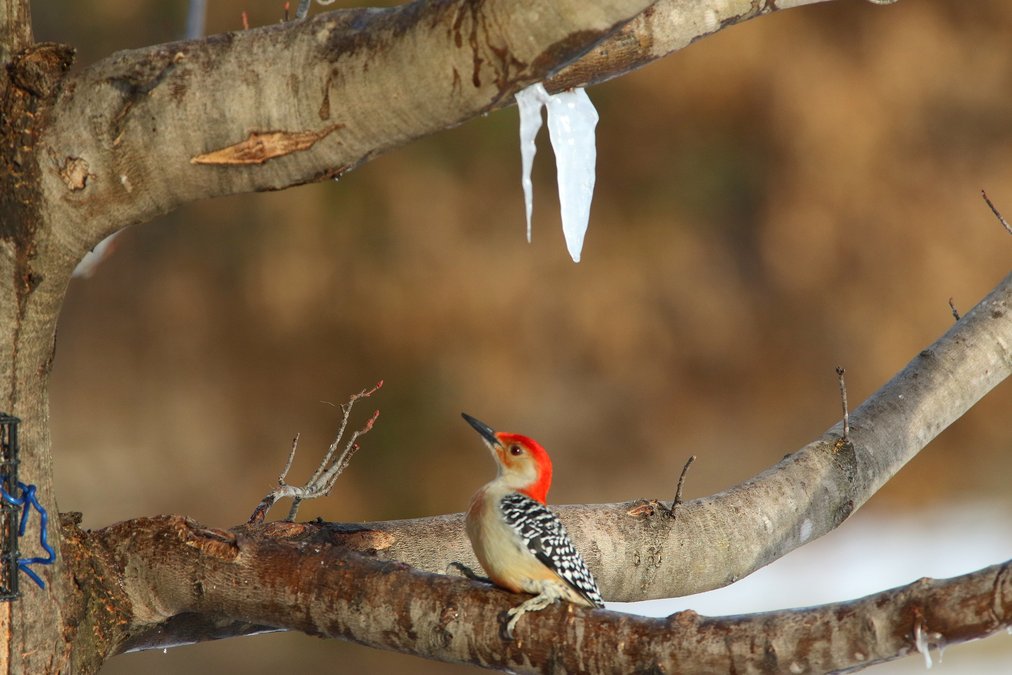
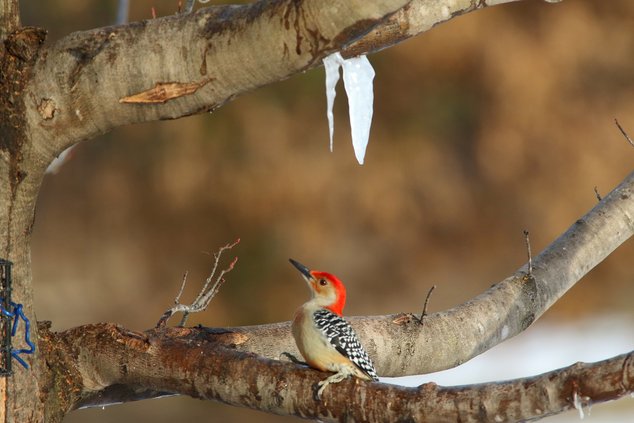
Who could pass up a maple sap icicle snapped from a maple limb with 4 percent sweetness? These icicles are not likely to melt before stowing them in a freezer.
Flowers of any kind are rare but catkins on willows are flowers; relics of tulip tree and ghost plant blooms still count as flowers, as does a skunk cabbage as long as it’s not smelled. But then, why not crush a green leaf just to know the name is real?
Animal names can morph into pleasantries. Deer becomes dear, or just leave it deer. Fawn, ewe (you), hare (hair), bee (mine), dove (love) and honey all work on greeting cards.
Picked or pictures of strength; an eagle in a white oak tree say strong without a cutline.
Forced flowers or foliage are free.
Actions of love, friendship and fondness in nature are just beginning or finishing late. A blurred photo of a large buck deer chasing after a doe could result in an August fawn.
A coyote fighting another “dog” for right to mate with a nearby female coyote (but the name is not nice) begins as more that a tussle in the snow.
Bald eagles have chosen one another but continue to mate while perched on a limb or carrying the last vine to an updated nest.
These winter animals are sometimes pushed to feed on low grade vegetation or are lucky enough to find an arbor vitae tree, candy to a starving deer biologists claim.
Other deer picked lichens, moss, and even the bark from trees. Look for a recently fallen aspen tree and notice the bark is all but gone by spring.
White pine needles are as palatable as spring’s clover. Or warm those hooves in “hot” water and munch on some watercress we might imagine a deer saying.
Wild turkeys find skunk cabbage edible as the first winter greens of the new year. Here and elsewhere beak fights break out with the winner taking some, but not all, the hens.
Cardinals, sometimes even wild turkeys shadow box at their reflections in basement windows. Their fights for one another are not much appreciated by homeowners.
Fondness has its dangers in the animal world when threes a crowd, but most losers live to fight, and maybe mate another day.
A winter search for holiday objects may bring some surprises and treats. Just be careful of the elements.
Contact Jerry Davis, a freelance writer, at sivadjam@mhtc.net or
608.924.1112