Sweet corn and field corn can be our clue of a long list of outdoors events on the horizon.
Field corn is full of surprises, too with ears and tassels concealing what they really are until pollen begins drifting about even before ragweed releases it culprits, which are something to sneeze about.
The tufts of silk are a bouquet of thousands of stigma ends of developing fruits. Any fruit, nut, berry, or other seed covering must first catch pollen to initiate fertilization as it did months ago in walnuts, apples, blackberries, ginseng, and Mayapples.
The recent and ongoing heat spells were more than enough to cause some of those delicate pollen and fertilization structures to malfunction. Garden bean flowers aborted and there will be missing kernels on corn cobs of sweet and field corn.
A lack of moisture can and did do damage to this important process, too.
Those plants that managed to surpass these weather events during reproduction are not necessarily home free. A number of oaks are shedding leaves to conserve moisture so there is enough to save the fruit at the expense of reducing the amount of wood formed, which shows up years later in a narrow growth ring in 2026, or even the following year.
Corn smut signals that summer and fall diseases are beginning to show. Some corn diseases are rusts, appropriately named for the millions of rust-colored spores fungi produce and release.
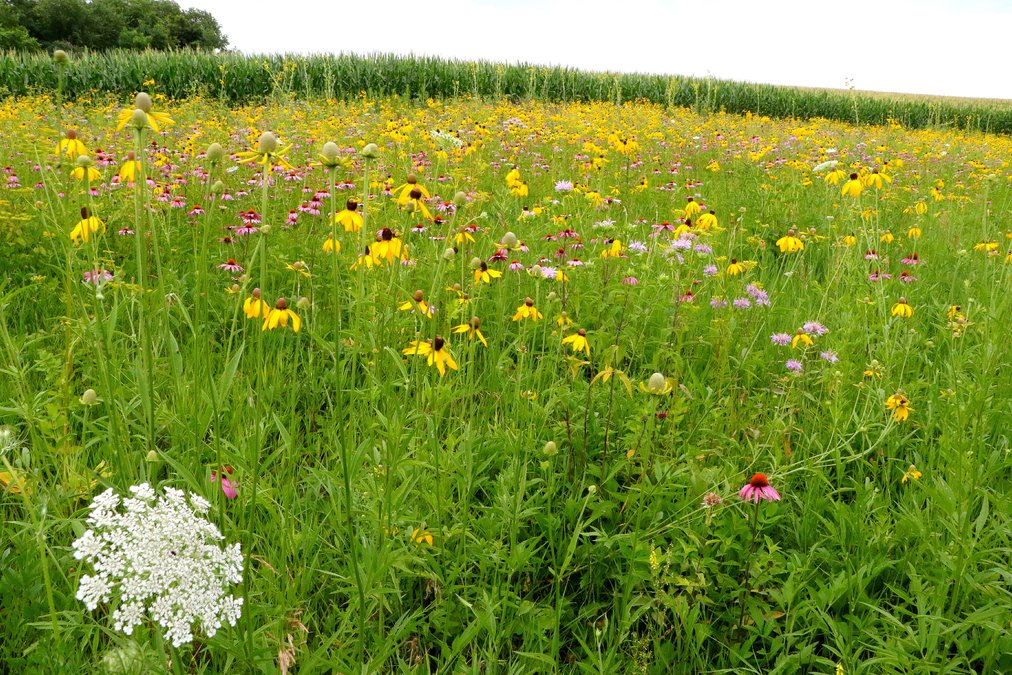
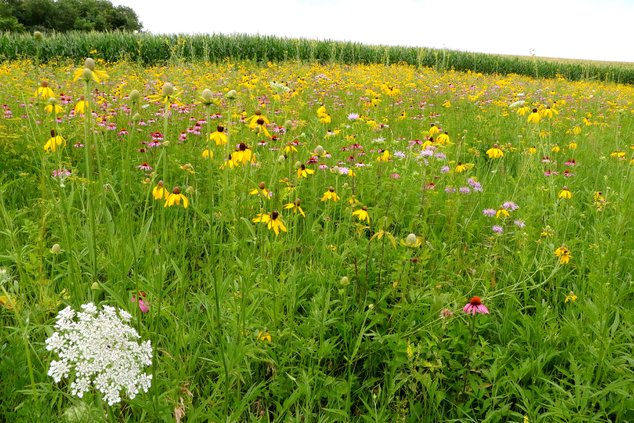
This is a stage when the yellow coneflowers, compass plants and a host of sunflowers shoulder in we dispel them and notice white has entered the scene in Amanita mushrooms, all-white ghost plant flowers and stems, Queen Anne’s lace, poison hemlock, fleabane, coral and tooth fungus, puffballs, and the tiniest stickseed flowers are developing the worst of the hitchhiking plant structures.
It seems as though deer of all ages are munching the corn even before the parts we eat are noticed, were it not for the silks and tassels.
Still, other crops wild fruits, seeds, and vegetation is on the menu. Compass plants and prickly berry canes are eaten as though they were winter’s white cedar or white pine scales and needles.
Travis Anderson, Wisconsin Department of Natural Resources wildlife biologist in Iowa and Lafayette counties, Wisconsin said that he’s noticed the giant ragweed having been hit especially hard by white-tailed deer feeding on the young stems and leaves. Even so, no one seems to be disappointed.
This summer’s heat and sometimes lack of adequate rainfall has not been harmful to young turkeys, pheasants and grouse. “Brood counts are just beginning and so far numbers and sightings have been good,” Anderson said. “It’s usually on the other end of the season, early spring, where young birds get in trouble with cool, rainy weather resulting in loss of young birds.”
Squirrels and raccoons wait for the corn fruits and seeds to mature more, as do the wild turkeys and ruffed grouse. Some birds, however, take advantage of the insect-attracting corn tassels and silks.
Personal communications regarding ruffed grouse from far northwest Wisconsin stated that there are more birds, including broods, than there were last year, and dry weather does not appear to be hampering the poult development.
Kelly Maguire, at the Poynette, Wisconsin game farm said the warm humid weather has not been a major factor in raising 65,000 pheasants for release on public hunting lands this fall.
“The birds, once in outside pens, make use of planted vegetation for shade and some insects associated with the plantings. The birds dig holes to sit in to cool, too,” she said.
While summer mowing of fallow ground, a raft of turkeys, hens and their poults, flushed from a weedy prairie of grasses, forbs and sapling walnuts and aspens. It was likely the insects, many of which were grasshoppers, held the gamebirds.
Deer, including fawns, seem to be doing fine with this summer’s weather. They are able to get moisture from lush vegetation and are using forest areas for cooling and some protection from biting flies.
This summer’s fantastic crop of wild bee balm plants has been a help for pollinating insects and the plant, too. Mowing in areas where the mature plants have begun to die back, the impressive fragrance comes through when a few stems are crushed by whirling blades.
Hoppers are a trout flyfisher’s best dream as hot days cool enough at dusk to draw large and small trout to check the surface for a jumping insect misgauging vegetation and landing on the surface and is either bait or the real thing for a hungry brown.
With the beginning of blackberry picking season wild fruit gathering continues with gatherers using these fruit the same as they did with blackcaps, primarily cereal and ice cream topping, jelly, jam and wine or juice drink and flavoring.
White oak acorns, black walnuts, shagbark hickory nuts and hazelnuts all look fine.
Those hints of autumn are mostly stress and death of older leaves or, as in walnut a weak, bothersome fungus. Individual woodbine leaflets are brightening frowns with red-to-pink small foliage. A few aspen leaves are joining in the coloring. All that, but together with the whites makes hikes in the forest margins cool and refreshing.
Contact Jerry Davis, a freelance writer, at sivadjam@mhtc.net or 608.924.1112.