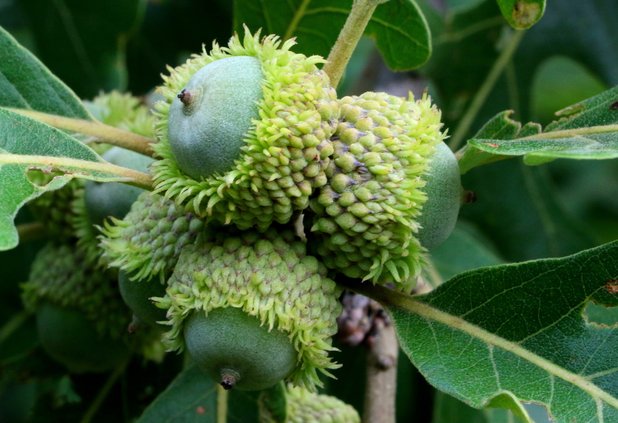
Wisconsin’s list of nut trees is now on the minds of hunters, bird feeders, seed collectors, and nature observers looking ahead to autumn hunting and gathering seasons.
More than a dozen oaks, two walnuts, two hickories and several species not native to the state, including American chestnut, provide many options to gather these energy packages for various uses.
The shagbark hickory was nominated as Wisconsin’s State nut tree, but the process stalled before being approved. The sugar maple, not a nut tree, is Wisconsin’s state tree.
Nuts for human consumption fall mainly to black walnuts and shagbark hickory, with hazelnut, a shrub, grown as minimal plantings. American chestnut even less so.
Many of these trees have additional uses including firewood, lumber, finishing lumber, baseball bats, shade, artistry, photography, and landscaping.
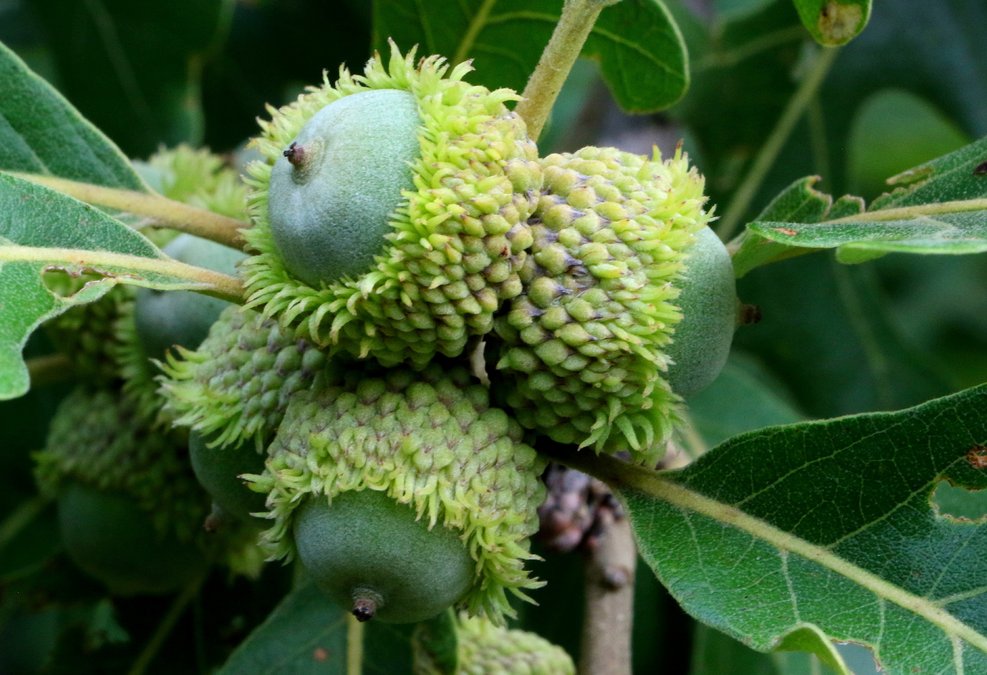
Assessing the mast crop can be tricky because not all of these seed containers develop fully during the year the flowers are pollinated. Red oak species, particularly red, black and pin oaks, complete acorn growth during a second year. This means there are 2025 acorns maturing and 2026 nuts just beginning on the same tree, even the same branch.
All the white oak species complete the process the same year the flowers first form, as do black and white walnuts.
Deer hunters, particularly archers, are most interested in bur, white, and swamp white oak acorns. Bur oaks drop early and are often eaten from the tree by deer standing on their hind legs to reach some fruits containing a single seed.
What is now on the trees will be what the crops become, minus those taken down by the wind, animals, and those ending up infested with insect larvae.
Chestnuts and acorns are true nuts with one seed inside each fruit. Walnuts and hickory nuts are drupe fruits, just as a peach is a drupe, but that matters little to the hunter or consumer or deer.
Nuts are often used in art, particularly oak acorn cups, also called caps.
Pine seeds are bare seeds and not inside fruits and are also eaten as seeds. Like the red oaks, Wisconsin’s three pines, red, white and Jack, take two years to develop before dropping from seed cones.
In addition to an assessment of nuts and other fruits of autumn the Wisconsin Department of Natural Resource Fall Hunting Forecast has now been made available on the DNR web site, along with the Fall 2026-Spring 2027 Wisconsin Hunting Regulations hunters should follow when hunting deer, small game, wild turkeys and other species.
This pamphlet is now available on the DNR web site and will be available free in print in August.
The fall forecast addresses deer, bear, migratory birds, upland birds, and furbearers. Each section gives hunters, landowners, and nature viewers an idea of the species populations, units where the animals are to be hunted, and a number of season reminders on public land opportunities, game registrations, chronic wasting disease, testing across Wisconsin, and deer district forecasts for Northeast, West-Central, Southern, and Northern parts of Wisconsin.
All season dates are listed in the regulation pamphlet.
Ruffed grouse populations are still healthy and abundant in the northern third of Wisconsin, the forecast reported.
The grouse season in the northern area, Zone A, opens September 12 and closes January 3, 2027, with a daily bag limit of five birds and a possession limit of three times the daily bag limit.
The sharp-tailed grouse season will remain closed this fall.
Some of the New For 2026 items for the deer seasons include 48 counties having an antlerless-only holiday hunt from December 24 to January 1, 2027. In 42 of those 48 counties, there will also be an extended archery and crossbow seasons closing January 31, 2027. Some of the farmland zone counties have modified the number of antlerless harvest authorizations issued free with each license.
Color coded state maps, mainly for deer seasons and management areas, are included in these documents.
An immediate assessment of vegetation and animal changes are signaling the impacts of the recent lack of ample precipitation, reduced minutes of daylight, maturing leaves, and young animal populations.
Buck deer, defined in the regulations pamphlet as having at least one antler three inches or more in length, are nearing the end of the growing period but have not begun to shed the velvety covering. Bucks remain in bachelor groups of two or more animals.
Fawns are still spotted. Many deer show hairless areas where the animals have rubbed to remove biting insects. Otherwise most does have regained their fine body form, gained weight, and have found developing corn ears to their liking.
Goldenrod plants are beginning to flower and will soon be the dominant bloom in fields and prairies.
Hitchhiking plant parts are maturing. Look for a wide variety on clothing after a woodland hike or hunt.
Some garden vegetables and fruits have taken a hit with the recent dry spells.
One of the safest places for new potatoes to store seems to be underground even though the plant above the soil may be dead.
Contact Jerry Davis, a freelance writer, at sivadjam@mhtc.net or 608.924.1112.