PLATTEVILLE, April 29 — The Platteville Common Council voted April 21 to go ahead with the East Main Street reconstruction project starting next year.
The council voted 6–1, with at-large Ald. Steve Badger opposed, to borrow $404,000 more than the city had budgeted for its Capital Improvement Plan to fund this year’s work on the project. The city also will be borrowing an additional $895,000 in 2027 and 2028 for the project.
The East Main project includes the purchase and demolition of the building at 250 E. Main St., underneath which is a storm sewer culvert in danger of collapse.
The council chose to increase borrowing instead of cutting CIP projects (though the city is not going ahead with the purchase of an end loader) or pulling the plug on the project and returning the federal money.
The city received a $1.5 million federal Surface Transportation Program — Urban grant to fund what started as a $1.925 million street and sewer project before the decision to buy the building. Jewell Associates, which designed the project, determined the building might suffer structural damage from pounding of rock and construction activity.
Then:
- The city found out that accepting the grant also meant the city had to reimburse tenants of the building, which has The Platteville Journal office and four apartments.
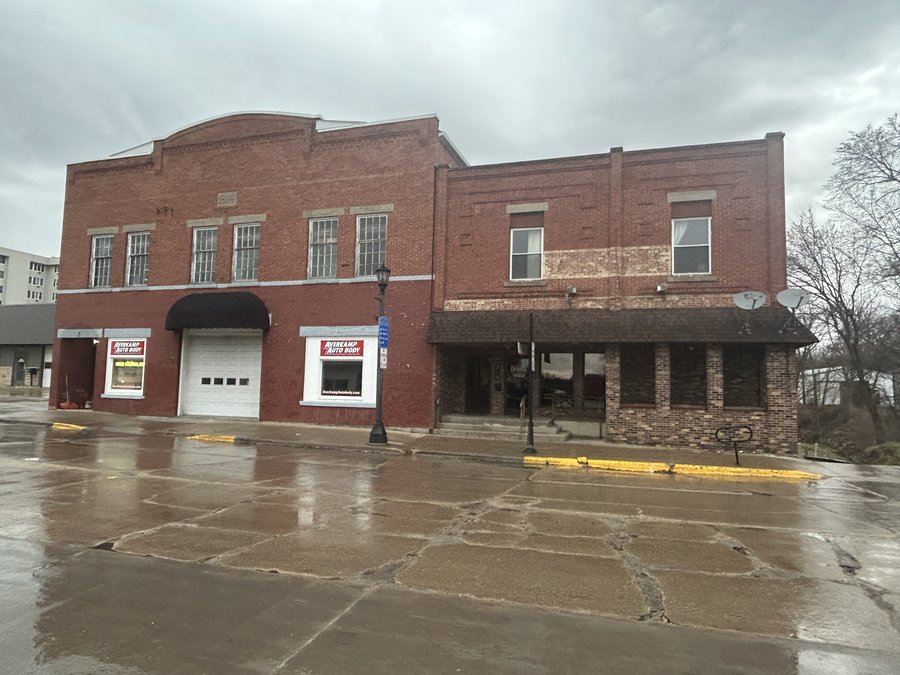
- The city also has to cover costs of tests to determine if the next-door Averkamp Auto Body building at 230 E. Main St. would be damaged by demolition or construction, and possible work including shoring up the east side of the 230 building and extending the brick veneer to the ground.
- Other testing found soil contaminated with lead, which must be remediated, along East Main in front of two former gas stations at the northeast and southeast corners of the East Main–Water Street intersection.
Those extra costs expanded the city’s costs to $2.043 million, plus another $775,000 assessed to the city’s water and sewer utility.
Jewell Associates determined that pounding of rock and other construction activity would need to take place less than 10 feet from the building, which has cracks and leans to the east, to relocate the culvert. According to city records, Jewell could not guarantee that the building could survive construction activity that close to the building.
The council chose more CIP borrowing instead of not doing planned work on Jefferson Street and reducing storm sewer work or trail maintenance. The council also chose to not reject the federal funding, which would require repaying $157,000 in design costs and force the city to pay for the entire $3.6 million project, or delaying the project indefinitely, running the risk of sinkholes or failure of the storm sewer under the sidewalk in front of 250 E. Main St.
“When we go from $400,000 of Platteville responsibility to $2.5 million of Platteville responsibility, fixing that seems a lot less expensive,” said Badger of the sidewalk instead of buying the building.
But District 3 Ald. Bob Gates said if the city abandoned work on the project it “would have to do the project anyway at some point” without “the $1.5 million we’d be losing in federal funds.”
Common Council president Barb Daus said the city investigated alternatives to buying the 250 building last year and “none of them were feasible.”
Acting city manager Mark Rohloff said a culvert collapse would be “an immediate unbudgeted need.”
At the suggestion of returning the federal grant and then seeking another federal grant, he said, “federal grants take you several years to get.”
“If we walked away from this federal grant … we have other things that are coming” including replacement of the city’s Well 3 on Valley Road, said District 1 Ald. Brian Whisenant. “I would be loath to walk away from federal funding.”
The increased borrowing puts the city at 56 percent of its general operating debt capacity as determined by the state, and 80 percent of the city’s self-mandated borrowing limit.