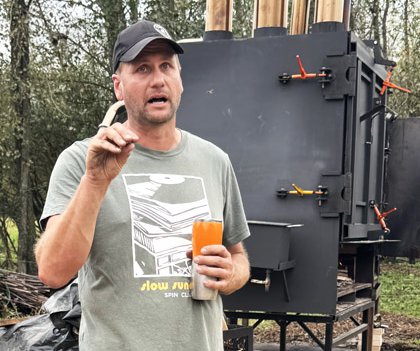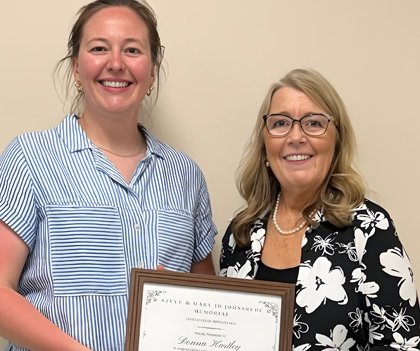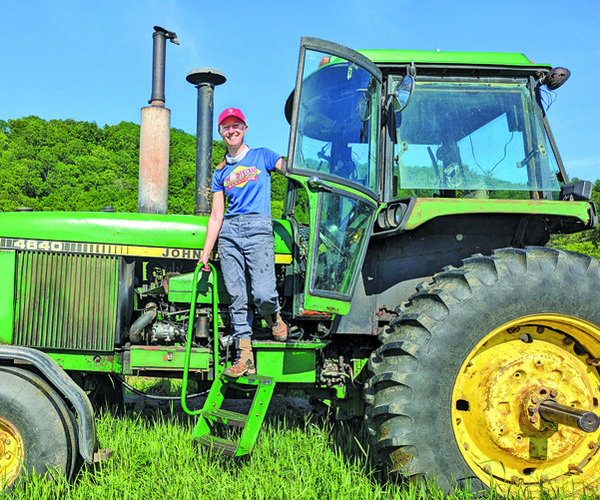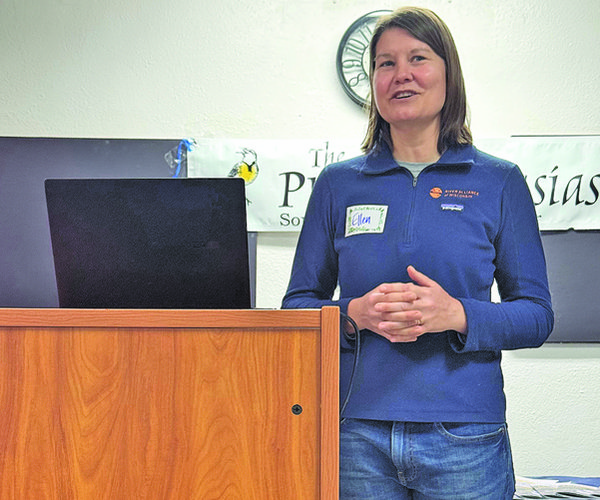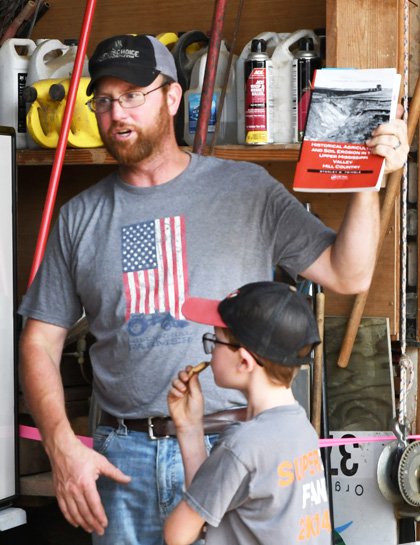
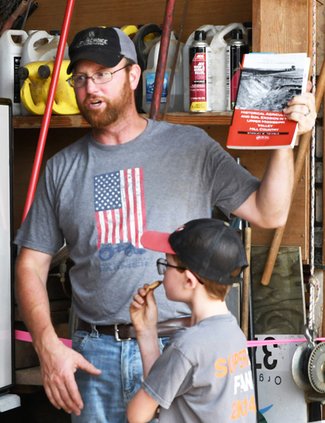
DRIFTLESS - Bad Axe Watershed Stewards founder and president Travis Klinkner and his family have recently been recognized both nationally and locally for their trailblazing conservation efforts.
The August 2018 flooding event, which exceeded all previous known floods in Southwest Wisconsin’s hill and valley terrain, left producers and communities recognizing that something had to be done to reduce runoff from ridgetop lands. Klinkner’s efforts to mobilize farmers toward flood-reducing conservation practices has been a shining example of what is possible when people work together.
As a result, Klinkner was recently awarded the National Private Lands Fish & Wildlife Stewardship Award from the Association of Fish and Wildlife Agencies (AFWA). The award recognizes “an individual or family-run farm, ranch for forestland operation that has incorporated proactive conservation and environmental practices, and exhibits outstanding stewardship of fish and wildlife resources.”
“Travis is active in grassroots organizations dedicated to improving watershed health through collaboration, education and on-the-ground action,” Valley Stewardship Network Executive Director Elizabeth Summers said. “In addition, he actively implements a wide range of best practices on his own land, and his farm serves as a regional model for regenerative agriculture and conservation. His tireless commitment to improving both the health of natural resources and the knowledge of his peers, has made a lasting impact on the Driftless Region and beyond.”
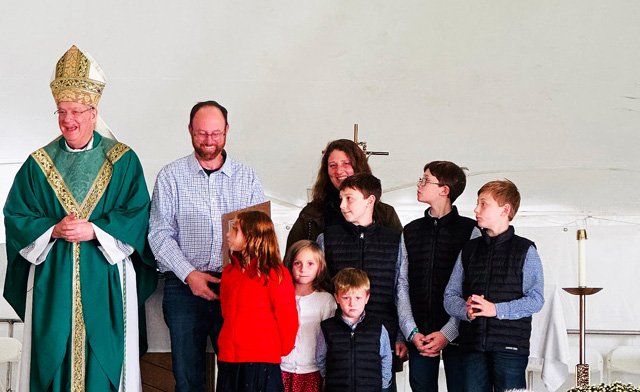
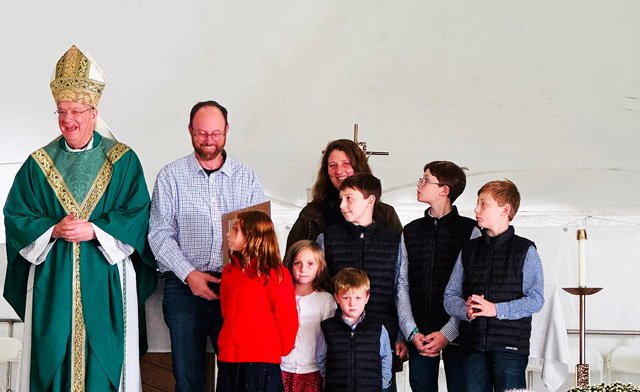
The Klinkners were also recognized by the Catholic Diocese of La Crosse with the ‘Strangers and Guests Award,’ recognizing the Klinkner family for their spirit of generosity, hospitality and servant leadership. The Diocese’s criteria for selecting award winners states that “the land should be used according to an ecologically sound management plan, and the farmer should have a sense of being a steward of God’s creation. The family should display a commitment and involvement in society beyond that of family and church, including involvement with organizations which help maintain rural culture.”
The Klinkners were nominated for the award from the Diocese by Chris and Keith Magnuson, members of the St. Charles Parish where the Klinkners worship.
“The Travis and Krista Klinkner Family are committed to their Catholic faith. We see them in church every Sunday, and they are involved with our parish with a spirit of generosity, hospitality and servant leadership,” the Magnusons wrote in their nomination letter. “This farm family has a strong sense of stewardship. They are stewards of God’s creation. Their farm management program includes both nutrient management and environmental stewardship in a big way.”
The family farm
Klinkner and his wife Krista operate a 229-acre centennial 60-head organic dairy and crop farm in the Bad Axe River Watershed near Genoa. They send their milk to Westby Cooperative Creamery. The farm they operate was purchased from Krista’s parents, Carl and Marilyn Volden, and they are the sixth generation of their family to live on and farm the acres.
Klinkner’s voluminous conservation efforts are aimed at infiltrating storm water, improving farm profitability, reducing erosion, sequestering carbon, and improving wildlife and pollinator habitat. Those efforts include methane-reducing feed supplements for their cattle, cover crops, crop residue management, rotational grazing, Prairie STRIPS, rain gardens and retention basins, prairie waterways, silvopasture and more.
“I don’t want to only slow down the water runoff coming from my ridgetop farm, I want to make sure the water can infiltrate so I don’t have any water coming off that impacts my neighbors or what’s downstream,” Klinkner explained.
The Klinkners have worked with federal, state and county partners, non-government organizations and academia, Fishers & Farmers Partnership, the Natural Resources Conservation Service, University of Wisconsin, and Valley Stewardship Network. These relationships have provided valuable education, inspirational ideas, and practical help with implementation for both his family and farmers throughout the Driftless Region.
“Aside from all the work that Travis does on the farm, it’s been clear that he is a leader in the community and advocates for conservation through the farmer-led watershed groups,” NRCS District Conservationist Justin Olson remarked.
Suite of practices
In addition to the regeneratively grazed dairy, the Klinkners raise corn, alfalfa and wheat in rotation on their ridgetop acres.
Conservation practices enhancing the dairy operation include using an essential oil feed enhancer supplement to reduce methane gas production by his dairy cattle. Methane is a powerful greenhouse gas that fuels climate change, and reducing methane from dairy farming is an important piece of the puzzle for climate change mitigation.
Klinkner has worked with the Savanna Institute to install a silvopasture system for his grazing paddocks as well. This involves planting honey locust, poplar and black walnut trees in contoured terraces, with grazing paddocks between.
Going forward, this will offer his cattle shade and forage, increasing their comfort and productivity, while sequestering increased carbon in his productive acres, and slowing down and infiltrating more storm water. This is another practice that can help to reduce flooding impacts in the watersheds below.
On his crop production acres, Klinkner plants on the contour in strips, and because he dairies, his ‘dairy rotation’ includes deep-rooted alfalfa for hay, which keeps living roots in the soil for multiple years. In addition, he is diversifying the rotations on his acres, which promotes biodiversity, and creates more windows for spreading manure. Adding in these more diverse rotations also helps to control pests and weeds within his organic production system.
To reduce soil disturbance, he has moved to low-disturbance tillage to do less plowing. He augments this with no-till planting of cover crops after harvest. These practices enhance the microbiological communities in the soil, helping his soils to be more resilient in the face of fluctuations in rainfall, reduce erosion, and protect the quality and quantity of ground and surface water.
He has also included strips of perennial, deep-rooted prairie in some of his less productive crop acres. This is both one of the best ways to reduce runoff, but also foster the pollinators his crops rely on.
“Beyond the day-to day practices implemented on their farm, the Klinkner family communicates their successes to other area farmers, helping to ensure the local watersheds and coldwater streams remain healthy for future generations,” DNR Director of Fisheries Management Justine Hasz shared. “Practices implemented by the Klinkner Family Farm align with DNR’s mission to provide a healthy and sustainable environment, protection and enhancement of coldwater habitats and ecosystems, and education of the public.”
Mixed into his work with his cattle and croplands, Klinkner has also included hard practices such as grade stabilization structures (farm ponds), a covered free-stall building, and a rain garden nearby. These practices are designed to temporarily hold storm water, and meter it out slowly. This slows the water down, reducing its destructiveness, prevents nutrients from entering waterways, and helps to reduce flooding in the watershed below.
In the future, Klinkner plans to continue to address the 30% of his acres that are forested. He has done timber cutting and forestry thinning, along with invasive species management, to increase the health of the forest and promote wildlife habitat.
He’s augmented this with building bat boxes, and bluebird and barn owl houses, helping to reestablish these species. Bats, barn swallows and other birds help to manage fly pressure on his herd during the growing season. Klinkner has also planted fruit trees, for personal and wildlife food, and to diversify his farm income stream in the future.
He also plans to find an apiary to bring bees to his farm, and to incorporate biochar into his pastures and cropland.
Practice effects
All of the conservation practices Klinkner has implemented on his family’s farm have resulted in the following effects:
- Lower disturbance tillage has saved $2,000 annually on fuel, and $4,000 on labor through reduced operational time, and $50 per acre on corn inputs
- Increased infilltration of water, helping to reduce erosion and runoff, and making his farm more resilient in the face of fluctuating weather patterns
- Rotational managed grazing produces 100 dry tons annually in additional forage compared to non-managed grazing, saving $10,000 annually on feed costs, and increasing milk production by 10 pounds of milk per cow
- Manure management has increased yield without increasing the fertilizer budget, and cover crops increase yield while reducing weed pressure and erosion.